(HT: Of First Importance)“I don’t think Christ is glorified anywhere more than when suffering people rejoice in him as their treasure.”
- John Piper, “Suffering for Christ,” an interview with C. J. Mahaney
Showing posts with label C.J. Mahaney. Show all posts
Showing posts with label C.J. Mahaney. Show all posts
Tuesday, January 13, 2009
When Christ Is The Treasure


Saturday, December 27, 2008
I'm The Worst Sinner I Know
Head over to the Straight Up blog and listen to James MacDonald's interview clip with C.J. Mahaney from the Straight Up Pastors Conference. If you haven't read or heard much from C.J. Mahaney (or even if you have), you may want to watch & listen to it more than once.
Tuesday, December 23, 2008
Disturbing Christmas
From C.J. Mahaney at the Sovereign Grace Blog:
The days before Christmas can be a tiring season of preparation, planning, shopping, and wrapping. But I think as we prepare for the Christmas celebrations, dinners, travel, and gift giving, it’s equally important that we pause and prepare our souls for Christmas.
During this time of year, it may be easy to forget that the bigger purpose behind Bethlehem was Calvary. But the purpose of the manger was realized in the horrors of the cross. The purpose of his birth was his death.
Or to put it more personally: Christmas is necessary because I am a sinner. The incarnation reminds us of our desperate condition before a holy God.
Several years ago WORLD Magazine published a column by William H. Smith with the provocative title, “Christmas is disturbing: Any real understanding of the Christmas messages will disturb anyone” (Dec. 26, 1992).
In part, Smith wrote:Many people who otherwise ignore God and the church have some religious feeling, or feel they ought to, at this time of the year. So they make their way to a church service or Christmas program. And when they go, they come away feeling vaguely warmed or at least better for having gone, but not disturbed.
Why aren’t people disturbed by Christmas? One reason is our tendency to sanitize the birth narratives. We romanticize the story of Mary and Joseph rather than deal with the painful dilemma they faced when the Lord chose Mary to be the virgin who would conceive her child by the power of the Holy Spirit. We beautify the birth scene, not coming to terms with the stench of the stable, the poverty of the parents, the hostility of Herod. Don’t miss my point. There is something truly comforting and warming about the Christmas story, but it comes from understanding the reality, not from denying it.
Most of us also have not come to terms with the baby in the manger. We sing, “Glory to the newborn King.” But do we truly recognize that the baby lying in the manger is appointed by God to be the King, to be either the Savior or Judge of all people? He is a most threatening person.
Malachi foresaw his coming and said, “But who can endure the day of his coming? Who can stand when he appears? For he is like a refiner’s fire or a launderer’s soap.” As long as we can keep him in the manger, and feel the sentimental feelings we have for babies, Jesus doesn’t disturb us. But once we understand that his coming means for every one of us either salvation or condemnation, he disturbs us deeply.What should be just as disturbing is the awful work Christ had to do to accomplish the salvation of his people. Yet his very name, Jesus, testifies to us of that work.
That baby was born so that “he who had no sin” would become “sin for us, so that in him we might become the righteousness of God.” The baby’s destiny from the moment of his conception was hell—hell in the place of sinners. When I look into the manger, I come away shaken as I realize again that he was born to pay the unbearable penalty for my sins.
That’s the message of Christmas: God reconciled the world to himself through Christ, man’s sin has alienated him from God, and man’s reconciliation with God is possible only through faith in Christ…Christmas is disturbing.
Don’t get me wrong—Christmas should be a wonderful celebration. Properly understood, the message of Christmas confronts before it comforts, it disturbs before it delights.
The purpose of Christ’s birth was to live a sinless life, suffer as our substitute on the cross, satisfy the wrath of God, defeat death, and secure our forgiveness and salvation.
Christmas is about God the Father (the offended party) taking the initiative to send his only begotten son to offer his life as the atoning sacrifice for our sins, so that we might be forgiven for our many sins.
As Smith so fitly concludes his column:Only those who have been profoundly disturbed to the point of deep repentance are able to receive the tidings of comfort, peace, and joy that Christmas proclaims.Amen and Merry Christmas!
Friday, February 22, 2008
Confession
C.J. Mahaney writes about confession of sin in response to the baseball steroid scandal in general and Andy Pettitte in particular:
When I have sinned against someone, a sincere confession is required. A confession that is sincere and pleasing to God will be specific and brief. I have learned to be suspicious of my confession if it’s general and lengthy. A sincere confession of sin should be specific (“I was arrogant and angry when I made that statement; will you please forgive me for sinning against you in this way?”) and brief (this shouldn’t take long). When I find myself adding an explanation to my confession, I’m not asking forgiveness but instead appealing for understanding.
If my so-called confession extends beyond a very specific (acknowledgement of sin) sentence or two, then I am most likely excusing my sin, and requesting understanding for my sin, rather than sincerely asking forgiveness because of my sin. So I have learned to be suspicious of any confession of sin that is lengthy. Genuine conviction of sin is evidenced by a sincere, specific, and brief confession of sin, without any reference to circumstances or the participation of anyone else. When I sin, I am responsible for my sin, and the cause of my sin is always within my heart and never lies outside my heart.
Often after I sin, and even after I confess my sin—most importantly to God to receive the forgiveness I need from him for my sin through the death of his Son for my many sins—I experience a conflict in my soul about the confessing, when necessary, to the appropriate individuals. And whenever there is this conflict in my soul about specifically confessing my sin, I am aware that pride is actively at work in my soul, opposing the confession and seeking to persuade me that it wouldn’t be wise or even necessary for me to confess. But I have learned to ignore this noise from my arrogant heart, and instead weaken this noise by specifically confessing my sin to the appropriate individual as quickly as possible.
When I do confess, first and foremost to God and then (where and when appropriate) to others, I want my confession to be sincere and specific. I want my confession to express genuine sorrow and gratefulness to God for the mercy I experience because of the substitutionary sacrifice of his Son for my sins on the cross.
And when I confess my sin to others and ask their forgiveness when I have sinned against them, I don’t want my confession to resemble the press conference of a high-profile athlete, characterized by evasive language and the refusal to be specific. Instead, I hope my confession of sin is the sincere and specific confession of one genuinely convicted of his sin, sorrowful about his sin, and amazed at the grace of God provided for the forgiveness of sin.
C.J.'s Gone Podcast
There's a new Sovereign Grace Leadership Interview Series podcast. The first episode is "The Pastor and His Reading," which contains a lot of good discussion, and the following book recommendations scattered throughout:
(HT: Sovereign Grace Blog)
Resources mentioned in the podcast:
- Together for the Gospel blog
- Neither Poverty nor Riches: A Biblical Theology of Possessions by Craig L. Blomberg
- The Great Exchange: My Sin for His Righteousness by Jerry Bridges and Bob Bevington
- Adopted into God's Family: Exploring a Pauline Metaphor by Trevor J. Burke
- Age of Opportunity: A Biblical Guide to Parenting Teens by Paul David Tripp
- He Who Gives Life: The Doctrine of the Holy Spirit by Graham A. Cole
- Engaging with the Holy Spirit: Real Questions, Practical Answers by Graham A. Cole
- The Cross of Christ by John R. W. Stott
- The Cross and Christian Ministry: Leadership Lessons from 1 Corinthians by D. A. Carson
- Overcoming Sin and Temptation by John Owen
- John Owen on the Christian Life by Sinclair B. Ferguson
- The Death of Death in the Death of Christ by John Owen and J. I. Packer
- Institutes of the Christian Religion (2 vols) by John Calvin
- The City of God by Augustine (Bettenson ed.)
- The Confessions by Augustine (Chadwick ed.)
- On the Incarnation by Saint Athanasius
- A Quest for Godliness: The Puritan Vision of the Christian Life by J. I. Packer
- Reformed Dogmatics, Vol. 1: Prolegomena by Herman Bavinck
- Reformed Dogmatics, Vol. 2: God and Creation by Herman Bavinck
- Reformed Dogmatics, Vol. 3: Sin and Salvation in Christ by Herman Bavinck
- Reformed Dogmatics, Vol. 4: Holy Spirit, Church, and New Creation by Herman Bavinck
- Person & Work of Christ by B. B. Warfield
- Inspiration and Authority of the Bible by B. B. Warfield
- Biblical Theology: Old and New Testaments by Geerhardus Vos
- Redemption Accomplished and Applied by John Murray
- How Long, O Lord? Reflections on Suffering and Evil by D. A. Carson
- Good to Great by Jim Collins
(HT: Sovereign Grace Blog)
Wednesday, February 13, 2008
Re: Rob Bell/Nooma
I've posted in the past a bit about Rob Bell and his Nooma videos (here, here, here, and here). Well, C.J. Mahaney has a recent post entitled "Rob Bell, the Pastor’s Task of Discernment, and My Heart." In it, he offers four suggested biblical priorities for "the pastoral task of discernment":
UPDATE: Vitamin Z has some good comments regarding Bell, Nooma, and Gilbert's reviews:
- Protect Your People
- Prepare Your Heart
- Preach Sound Doctrine
- Pray for Rob Bell
Part One: Overview and beginning of review, with the following headings:Part Two: The meat of the review, with the following headings:
- GIVING CREDIT WHERE IT'S DUE
- SUNDAY SCHOOL WITH A DOSE OF COOL
- PREACHING THE GOSPEL
- THE CROSS? THE RESURRECTION?
- HEY ROB, TRY THIS
- WHAT’S MISSING; WHAT’S NEEDED
Part Three: Comments on each of the first 18 Nooma videos
- NOOMA MISLEADS LOST PEOPLE
- NOOMA IS UNCLEAR ABOUT THE MEANING OF THE CROSS
- NOOMA TURNS CHRISTIANITY INTO A BANAL MORALISM
- CONCLUSION
UPDATE: Vitamin Z has some good comments regarding Bell, Nooma, and Gilbert's reviews:
I hesitate to leave this up because I don't want you to be a 2nd hander. Make your own conclusions. Don't just trust Greg's assessment. If you haven't seen any of the NOOMA videos then I would encourage you to suspend judgment.
My friend John is a big fan of NOOMA and he was telling me that we need to keep in mind that Rob's video are not meant to encapsulate all of theology in 10min. Just because he might not outline his understand of the atonement in every video doesn't mean that he is heretical. If so, we would need to indict Jesus as being heretical for not communicating all of theology in each one of his parables. If Jesus told stories that were incomplete in an of themselves, why should we accuse Rob of doing the same? That is John's take.
I don't know. I am just passing along info here. Watch the NOOMA videos, read Greg's post and judge for yourself but do so with humility and gentleness.
Thursday, February 07, 2008
More Mahaney On The Cross
If you aren't already, you should be checking C.J.'s Sovereign Grace Blog before coming here. Here's a bit from his post on Preaching and Sightings of Calvary:
Never assume the gospel
We must never assume the gospel. We must always assume that those we serve need to hear the gospel yet again. Any sermon we preach is incomplete and insufficient until we explicitly reference Christ and him crucified.
In the book A Quest for Godliness: The Puritan Vision of the Christian Life, J.I Packer writes,The preachers’ commission is to declare the whole counsel of God; but the cross is the centre of that counsel, and the Puritans knew that the traveller through the Bible landscape misses his way as soon as he loses sight of the hill called Calvary.Every sermon must have a sighting of the hill called Calvary, because each passage of Scripture points us to the cross. In Christ-Centered Preaching, Bryan Chapell writes,
In its context, every passage possesses one or more of four redemptive foci. Every text is predictive of the work of Christ, preparatory for the work of Christ, reflective of the work of Christ, and/or resultant of the work of Christ.And because every text of Scripture points us to the cross, every topic should likewise point us to the cross. Thomas Jones says, “No doctrine of Scripture may faithfully be set before men unless it is displayed in its relationship to the cross.”
The message of the cross is central to the commission of the preacher, is to be on display in every sermon, is cultivated from every text of Scripture, and is embedded within every topic and doctrine intended to nourish the church.
Cross-eyed
Whether it’s a pastor’s personal reading of Scripture or the weekly preaching of Scripture, we must never lose sight of Calvary. In every sermon there must be some sighting of Calvary.
My prayer for Sovereign Grace pastors is that they build churches who gather together in anticipation of a Calvary sighting. I pray that even as Scripture is read before the sermon, our churches would await with anticipation that point in the sermon where Calvary will be made visible. And the more apparently obscure the passage, the more excited they would be that from this passage, at some point during the sermon, their spiritual sight will be pointed toward the hill called Calvary.
So never lose sight of Calvary, and never let those you serve lose sight of Calvary. In each sermon let there be a sighting of the hill of Calvary and what was accomplished there by our Lord and Savior Jesus Christ.
Wednesday, February 06, 2008
Humility & Bill Belichick
After watching the Super Bowl, and seeing Patriots coach Bill Belichick stomp off the field with one second left on the game clock, I had more ammo to tear him down for his arrogance and classless nature. I enjoyed listening to Jim Rome on Monday, ripping into "Hoodie" for his behavior. In reading a blog post by C.J. Mahaney, I read some of the same comments I had been thinking about Belichick. However, where my thoughts stopped, Mahaney continued:
But I must pay careful attention to my heart as I critique coach Belichick, because I am vulnerable to my own more serious expression of arrogance as I observe Bill Belichick. In critiquing coach Belichick and teaching my son biblical discernment and the importance of godly character, I must avoid a self-righteous attitude.
Bill Belichick is not the worst sinner I know. I am the worst sinner I know. For am I most familiar with the countless sins I have committed against God, the countless times I have responded in a similar way as Mr. Belichick when I have encountered the test of adversity. Though it doesn’t appear Bill Belichick is a humble man, I know I am not a humble man.I am a proud man who is pursuing humility only by the grace of God. And it is only by the grace of God that I have been saved from the wrath of God against my sins. It is only by the death of the Lord Jesus Christ, on the cross, as my substitute for my sins, that I am forgiven of my many sins and have hope for the weakening of pride in my life. And therefore the appropriate response to what I observed in Mr. Belichick last night is to pray that he will become aware of his need for a Savior and turn from his sins and trust the Savior.
Read the whole post here.
Thursday, January 31, 2008
C.J. on the Cross
More C.J. on the cross of Jesus Christ:
We awaken each day with a tendency to forget that which is most important: the gospel. All of us should assume this tendency and be aware of this tendency. Because of the Fall and due to the effects of remaining sin, we have a daily tendency and temptation to forget stuff in general and to forget that which is most important in particular.C.J. goes on to answer the question he's most commonly asked: “What books on the cross of Christ have affected you the most?” It's great read, as he writes about four books and tells how they've affected him and why he recommends them.
Assuming this tendency, we must create practices that will enable us to remember what we must not forget—the cross. So each day I seek to spend time in a location where I am not distracted, unhurriedly reading and meditating on Scripture and finding my way in Scripture to a hill called Calvary to meditate each day on Christ and him crucified. Each day I need to remind myself of the gospel. I cannot live on yesterday’s recollection of the gospel. I need to review and rehearse the gospel each day or I will assume the gospel, forget the gospel, and prove vulnerable to all manner of temptation and sin.
Wednesday, January 30, 2008
C.J. Gives In!
C.J. Mahaney has started a blog at Sovereign Grace Ministries. In case you don't know much about him, here's why I love C.J. Mahaney and have learned a lot from him, taken from his first blog post:
I think you can anticipate a disproportionate number of posts on one topic, “Christ and him crucified” (1 Cor. 2:2), for that, by the grace of God, is what I am most passionate about. So here would be my hope for this blog, and for the handful of you that will join my family in reading it. If I can somehow draw your attention each week to the hill called Calvary and remind you of the Savior’s substitutionary sacrifice on the cross for our sins, if I can draw your attention away from yourself and direct your affections to him, then this blog will have served your soul and made some small difference for the glory of God. I pray it does.Amen, C.J. Thank you for doing just that for me quite often over the past 8 years or so.
Wednesday, August 22, 2007
Sovereign Grace Messages
From JT at Between Two Worlds:
Keith Plummer points out that "Sovereign Grace Ministries is giving an invaluable gift to the body of Christ by making their store's entire collection of MP3 messages available for free download. Audios are sorted by topic, event, and speaker." Here are some of the speakers:
Randy Alcorn
Mark Altrogge
Mike Bullmore
Mark Dever
Ligon Duncan
Wayne Grudem
Joshua Harris
C. J. Mahaney
John MacArthur
Carolyn McCulley
Albert Mohler
John Piper
David Powlison
Ken Sande
R.C. Sproul
Bruce Ware
Thursday, May 31, 2007
New Attitude 2007
From Justin Taylor:
The New Attitude audio messages are all now available for free download (free registration required):God has used Piper & Mahaney to teach me a lot in the past 7 or 8 years, and I'm looking forward to listening to each of these messages.They write:
- Joshua Harris – Discernment
- Mark Dever – Discern Your Doctrine
- Albert Mohler – Discern Your Culture
- C.J. Mahaney – Discern Your Heart
- Eric Simmons – Discern the Graymatters
- John Piper – Discern What Pleases God: Himself
- John Piper – Discern What Pleases God: Personal Obedience
- C.J. Mahaney – Discern How to Apply
For the first time ever, we're offering all audio messages from this conference as free MP3 downloads. You can download them one by one or choose the download set of all eight messages. (In order to view these free downloads, you'll need to log in to our online store or follow the easy instructions to create an account.) In addition, an MP3 CD containing all conference sessions will be available for $12.00 next week.
Although the conference is over, the conversation on humble orthodoxy continues. Visit www.newattitude.org for blog posts, free downloads, and other resources to help you apply the truth of God's Word to your life.
Monday, September 11, 2006
Where Were You?, Part 3
Today I listened to CJ Mahaney's sermon from September 16, 2001. In it, he addresses the question of how Christians are to respond to the despicable acts of terror perpetrated on our country on 9/11. Mahaney gave a passionate, eloquent message based on Romans 12:9-13:5, explaining the difference between the role of Christians as members of the body of Christ vs. the role of our government as "the servant of God, an avenger who carries out God's wrath." You can listen to the sermon here, or read it here. The sermon climaxes in Mahaney's closing prayer. I highly recommend downloading the mp3 file, if only to listen to the prayer, which is about the last 6 minutes. Text doesn't do it justice, but here is an excerpt from the prayer:
Lord, we pray that you would have mercy on all those who have been involved in this atrocity. By your Spirit, through your Word, through your church, throughout the world, we pray that there would be conviction of sin upon all those who have participated and perpetrated these acts. We pray that you would awaken their consciences; we pray that they would recognize the sinfulness of what they have done. We pray that they would recognize that they have offended you and have aroused your wrath. We pray that they would fear you and we pray that they would flee to the Cross and appeal for forgiveness of their sins.
Lord, we pray for there to be conversions among these various terrorist networks. We pray for a mighty work of your Spirit, the glory of which can only be ascribed to you. We pray that in the months and years to come, we will hear of individuals who have been genuinely converted by the grace of God through the proclamation of the gospel. Father, we as your church, representing you, and in obedience to your Word, do not repay evil with evil, but instead join our voices together to appeal to you to have the same mercy on them that we experienced when we heard the gospel, when you forgave our sins, when you regenerated our hearts. Extend that mercy to yet another group of undeserving sinners, we pray for the glory of your Son.
Tuesday, August 22, 2006
Humility
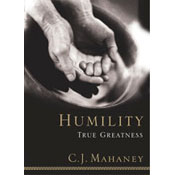 I recently finished reading C.J. Mahaney's Humility: True Greatness. One of the first things that really caught my attention in the book was this quote from Mark Dever:
"C.J. Mahaney is not humble. At least, that's what he'll tell you. And that's one reason he's so well qualified to write this book. I've read it. I've seen humility in his life--and in the lives of those he's taught. If you're fighting pride--like I am--you should read it, too. And if you're not fighting pride, you really need to read it!"
As with his other books, Mahaney packs a lot of insight into a small volume. I could go on and on about the book, but instead I'll just share a few definitions he puts forth, and then some of the suggestions, or "strategies" he gives for weakening pride and cultivating humility.
His definitions:
"Humility is honestly assessing ourselves in light of God's holiness and our sinfulness."
"Pride is when sinful human beings aspire to the status and position of God and refuse to acknowledge their dependence upon Him."
"... true greatness as biblically defined: Serving others for the glory of God."
Some strategies intended to "weaken pride and cultivate humility":
- Reflect on the wonder of the cross of Christ. (p. 65)
- Begin your day by acknowledging your dependence upon God and your need for God. (p. 69)
- Begin your day expressing gratefulness to God. (p. 70)
- Practice the spiritual disciplines - prayer, study of God's Word, worship. (p. 72)
- Memorize and meditate on Scripture. (p. 73)
- Cast your cares upon Him. (p. 74)
- Study the attributes of God. (p. 87)
- Study the doctrines of grace. (p. 90)
- Study the doctine of sin. (p. 92)
- Laugh often, and laugh often at yourself. (p. 94)
- Identify evidences of grace in others. (p. 98)
- Encourage others each and every day. (p. 111)
- Invite and pursue correction. (p. 123)
- Respond humbly to trials. (p. 137)
Mahaney also has some good advice for parents to help their children "become truly great in the eyes of God":
- Be an example of greatness for them. (p. 158)
- Clearly define true greatness for them. (p. 159)
- Teach them to discern and admire true greatness. (p. 160)
- Teach them to serve - and serve with them. (p. 165)
I've always been a fan of quotes, even though I know that they have limited value. I guess I've had so many throughout the years help me to understand things that I was maybe on the verge of understanding, or putting things in a perspective that I hadn't thought of before. Anyway, one line of Mahaney's in particular stuck out to me and gave me goosebumps:
"Here's an essential truth: To learn true humility, we need more than a redefinition of greatness; we need even more than Jesus' personal example of humble service. What we need is His death."
May our search for humility lead us always to the foot of the cross of Christ.
"Have this attitude in yourselves which was also in Christ Jesus, who, although He existed in the form of God, did not regard equality with God a thing to be grasped, but emptied Himself, taking the form of a bond-servant, and being made in the likeness of men. Being found in appearance as a man, He humbled Himself by becoming obedient to the point of death, even death on a cross. For this reason also, God highly exalted Him, and bestowed on Him the name which is above every name, so that at the name of Jesus every knee will bow, of those who are in heaven and on earth and under the earth, and that every tongue will confess that Jesus Christ is Lord, to the glory of God the Father. " Philippians 2:5-11 (NASB)
Tuesday, August 15, 2006
Books
Tim Ellsworth shares a list of 9 books, each under specific categories. I'm a sucker for lists, so I'll share mine, and hope some of you will share yours. I'll throw in a 10th category, as well (#7).
1. One book that changed your life: besides the Bible, I'd have to say "Desiring God" by John Piper.
2. One book that you have read more than once: "What's So Amazing About Grace?" by Philip Yancey
3. One book that you would want on a desert island: I can't even pretend to choose anything other than the Bible.
4. One book that made you laugh: "The Big Show: A Tribute to ESPN's SportsCenter" by Keith Olbermann and Dan Patrick.
5. One book that made you cry: "End of the Spear" by Steve Saint.
6. One book that you wish would have been written: "Dynasty: The Atlanta Braves 14 Consecutive World Series Championships."
7. One book that you would like to write: "WDJD: How 'the Christian life' is about what Jesus did do rather than what He would do."
8. One book that you wish would have never been written: "Mein Kampf"? I don't know.
9. One book that you are currently reading: "Humility: True Greatness" by C.J. Mahaney.
10. One book you’ve been meaning to read: "The Pilgrim's Progress" by John Bunyan.
Thursday, July 13, 2006
My Redeemer Lives
For this installment of song lyrics, I'm going back to Promise Keepers. One of the songs we sang both days was a surprise to me. When I was in college, I went to a weekend conference and was exposed for the first time to a man named C.J. Mahaney. I had never heard of him before, and had no idea what to expect. I was soon exposed to the most passionate, biblical teaching of God's sovereign grace that I had ever heard. At one point during the weekend, Mahaney distributed CDs to those in attendance of music put together by Sovereign Grace Ministries. The CD I received that weekend became one of my favorites, but I had never heard any of the songs anywhere else - not in church or on the radio - until last weekend. Below are the lyrics to "Before the Throne":
Before the throne of God aboveI highly recommend checking out some of the music samples & lyrics offered at Sovereign Grace's website.
I have a strong and perfect plea
A great High Priest whose name is love
Who ever lives and pleads for me
My name is graven on His hands
My name is written on His heart
I know that while in heaven He stands
No tongue can bid me thence depart
No tongue can bid me thence depart
When Satan tempts me to despair
And tells me of the guilt within
Upward I look and see Him there
Who made an end of all my sin
Because the sinless Savior died
My sinful soul is counted free
For God, the Just, is satisfied
To look on Him and pardon me
To look on Him and pardon me
Behold Him there, the risen Lamb
My perfect, spotless righteousness
The great unchangeable I AM
The King of Glory and of Grace
One with Himself I cannot die
My soul is purchased by His blood
My life is hid with Christ on high
With Christ my Savior and my God
With Christ my Savior and my God
Tuesday, May 30, 2006
The Blazing Fire
I just finished reading a book by C.J. Mahaney called Living the Cross Centered Life. Mahaney combined two of his previous books, The Cross Centered Life and Christ Our Mediator, adding some new material.
In his first letter to the Corinthians, Paul spoke with passion about the cross: "For I resolved to know nothing while I was with you except Jesus Christ and Him crucified." And "For what I received I passed on to you as of first importance: that Christ died for our sins according to the Scriptures, that He was buried, that He was raised on the third day according to the Scriptures..."
Mahaney urges us to not "move on" from the cross, but to, as Charles Spurgeon said, "Abide hard by the cross and search the mystery of His wounds." He seeks to carry on the legacy of, among others, Martin Luther, who said, "The gospel cannot be preached and heard enough, for it cannot be grasped well enough. ... Moreover, our greatest task is to keep you faithful to this article and to bequeath this treasure to you when we die."
Mahaney states three common tendencies that keep us from putting the cross of Christ at the center of our lives:
1. Subjectivism - "basing our view of God on our changing feelings and emotions."The book is a short read - a small book, roughly 7x5 inches, and only 176 pages - but not necessarily a quick read because of all that Mahaney packs in to his writing. I highly recommend taking some time to read this book.
2. Legalism - "basing our relationship with God on our own performance."
3. Condemnation - "being more focused on our sin than on God's grace."
Subscribe to:
Posts (Atom)